

Engineering & production planning
Batch 3D Printing Quality Control: Slicer Revision Locks, Golden Samples & Pre-Shipment Inspection
Plan batch FDM QC with locked slicer revisions, filament traceability, golden samples, first-article checks and shipment records. Request an inspection plan.
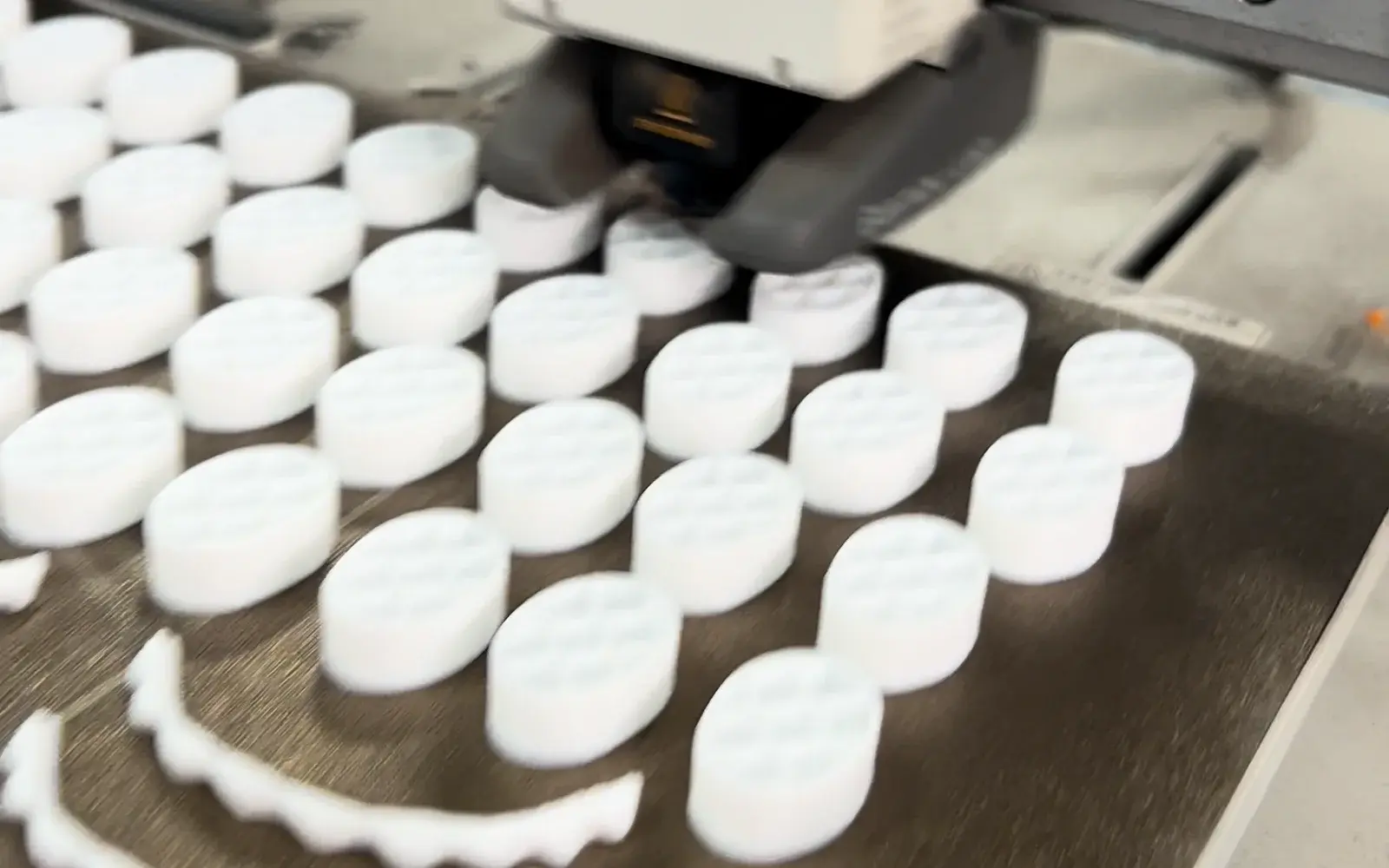
Use one controlled release package across the printer matrix
1,000+ Bambu Lab FDM printers, directly operated and centrally scheduled at a single factory in Houjie, Dongguan. Work can be parallelized only when each allocated system follows the approved release. During engineering review, define the project control plan and records that accompany your order. The workflow below describes release controls to agree for the project; it is not a certificate or a historical customer inspection report.
Link CAD, drawing, BOM, slicer version, printer/nozzle, material profile, orientation, layer height, wall loops, infill, support settings and G-code revision. Record the released file identifier or checksum. Operators should use the approved job package; any adjustment requires revision review rather than an unrecorded local edit.
| Record | Minimum fields | Change trigger |
|---|---|---|
| Digital release | Part/revision, slicer/profile ID, G-code ID, approval | CAD, toolpath, nozzle or process adjustment |
| Material | Grade, lot, color, drying and open-spool status | New lot, substitute, moisture or color deviation |
| Sample | Reference ID, drawing limits, fit and appearance sign-off | Interface, finish, hardware or packing change |
| Batch | Job/lot, allocated machines, checks, disposition | Start/restart, maintenance or nonconformance |
Trace filament lots and validate drying conditions
Specify grade, color code and lot before production. Use the exact manufacturer's drying temperature/time guidance, compatible spool limits and storage procedure; there is no safe universal drying temperature across PLA, PETG-CF, ASA and TPU. Record drying completion and handling when it is part of the agreed control plan.
Recheck extrusion, stringing, surface and dimensions after changing a material lot or exposing a spool beyond the agreed storage window. Retain a color sample for repeat orders and agree approval for substitutions. Drying records support process control; they do not replace mechanical or finished-part acceptance tests.
Approve a golden sample with measurable acceptance boundaries
Identify the physical sample and its digital revision. Review critical datums, mating clearances, inserts/fastener torque where applicable, visible seam/support marks and the packed configuration. Separate dimensional, functional and cosmetic criteria so a defect has a defined disposition.
Obtain customer sign-off on the approved revision and record any accepted deviation. A sample photo cannot replace a functional fit test where mating components matter. Keep the retained reference accessible and define how a later change or repeat lot is reapproved.
First-article and in-process checks contain drift early
Agree first-article inspection (FAI) when starting an allocated machine/setup and after relevant restarts, maintenance or changes. Compare the first piece with drawing dimensions, a fit gauge and the sample as appropriate. Hold affected work until deviations are reviewed.
Use calibrated calipers or suitable gauges with enough access and resolution for each feature. State datum, measurement force and conditioning; thin walls and TPU can deform under caliper pressure. Set in-process frequency by functional risk and production allocation. A single checked part does not establish conformance for every printer or every unit.
Agree dimensional sampling and packing-list verification
Identify lot size, sampling method, sample count, acceptance limits and escalation before the order starts. If an AQL plan is requested, agree the standard, inspection level and defect classes explicitly; do not infer a plan from an unspecified percentage. Sampling detects risk but does not prove zero defects.
| Characteristic | Requirement | Method | Result / disposition |
|---|---|---|---|
| PCB boss centers | Drawing revision and tolerance | Agreed datum and gauge | Record measured values at inspection |
| Installed inserts | Position, thread and agreed torque/fit | Thread/assembly check | Record inspected quantity and outcome |
| Cosmetic faces | Approved sample and zone boundaries | Agreed lighting/viewing distance | Record photos and defects |
| Cartons / trays | SKU, revision, count and packing list | Count, label scan and pack photos | Record reconciliation before release |
Review records before shipment authorization
Request the agreed dimensional table, assembly/visual photos and packing list before dispatch approval and the relevant payment milestone. Identify who can accept a deviation, authorize rework or release a replacement lot. The written quotation determines the record package, inspection scope and payment sequence.
For a repeat order, compare the requested revision, material/color, profile and packing specification with the last approved release. Review changes first; a previous order number alone does not authorize a new material or updated geometry.
Engineering questions, answered
How do you control dimensional tolerance across 1,000 FDM parts?
Agree critical datums, limits and gauges; lock the release package and material; validate allocated setups; then record first-piece and in-process checks under an agreed sampling plan.
Which slicer settings are frozen after sample approval?
Record slicer/software version, printer/nozzle, material profile, orientation, layer height, wall loops, infill, supports and the released G-code identifier. Changes require review and relevant reapproval.
Is one drying temperature suitable for every filament?
Use the exact grade and spool manufacturer's instructions for temperature, time and handling. PLA, PETG-CF, ASA and TPU should not share an assumed universal drying cycle.
What should a golden sample approval record contain?
Identify sample and file revisions, agreed material/color, critical dimensions, functional fit, hardware checks, cosmetic boundaries and packing. Record customer sign-off and accepted deviations.
Which documents can we review before final shipment?
Agree the dimensional sampling table, surface/assembly verification photos and reconciled packing list in the quotation. Review these records at the written shipment and payment milestones.
Technical references & calculation basis
Manufacturer references inform design and process review. Cost, schedule and purge examples on this page use the stated planning assumptions; project inputs determine the final production plan.
Your next engineering review
Define the inspection plan for my next batch
Start with PETG-CF and 500 units. Add your critical dimensions, application and approval requirements to the brief.
Request an engineering reviewPrepare CAD and drawings · Compare FDM materials · Review the QC workflow