

Industry · Electronics enclosures
Electronics Enclosure 3D Printing Services
Review the enclosure as part of a complete product rather than as an isolated shell.
What files are needed for a custom electronics enclosure?
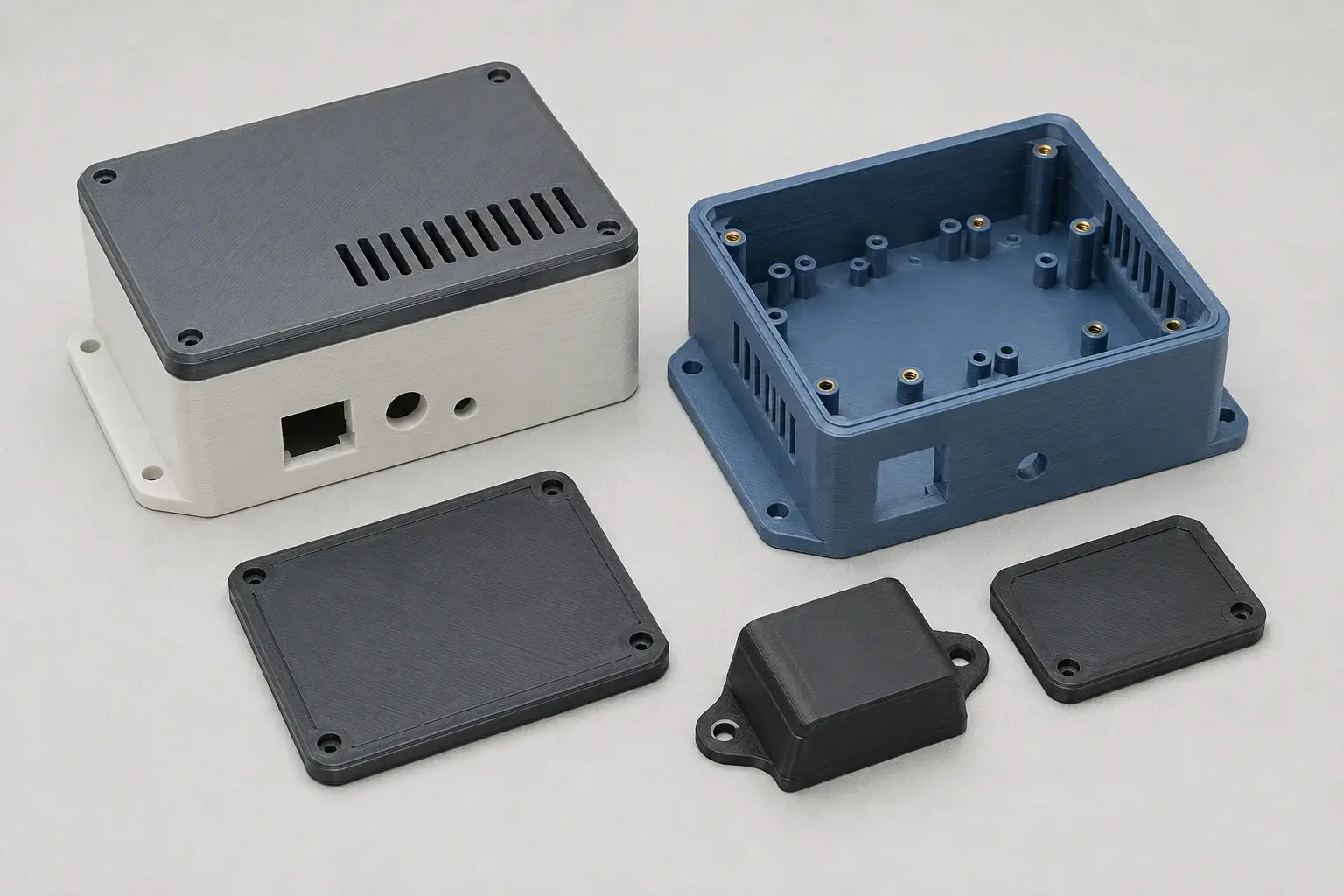
Supply the enclosure CAD, PCB outline and mounting positions, connector clearances, ventilation needs and assembly references. Mark critical fit dimensions and discuss a sample before releasing a batch. Printed enclosure geometry alone does not establish an IP rating, fire rating or electrical certification.
Review enclosure assembly planningManufacturing context
Start with the complete production intent.
Enclosures often carry multiple interfaces and purchased components. The production request should identify PCB revisions, connectors, fasteners, inserts, labels, and final assembly responsibility.
What the production review should establish
- Interface review
- Hardware and insert list
- Assembly ownership record
- Label and finish requirements
Inputs to prepare
These details allow an engineer to understand the project before confirming process, feasibility, or commercial terms.
- PCB and connector revision
- Heat and ventilation
- Fastener access
- EMI or certification requirements supplied by customer
Related production resources
Continue planning the manufacturing request.
Turn approved files into a production-ready request.
Share quantity, destination, material intent, finishing, assembly, and packing requirements. An engineer will review the complete project context.