

Engineering & production planning
FDM Print Farm vs. Injection Molding: Cost & Lead-Time Breakeven (100 to 5,000 Units)
Compare FDM and injection molding costs across 100 to 10,000 units. Use a transparent tooling breakeven model and request a project-specific batch review.
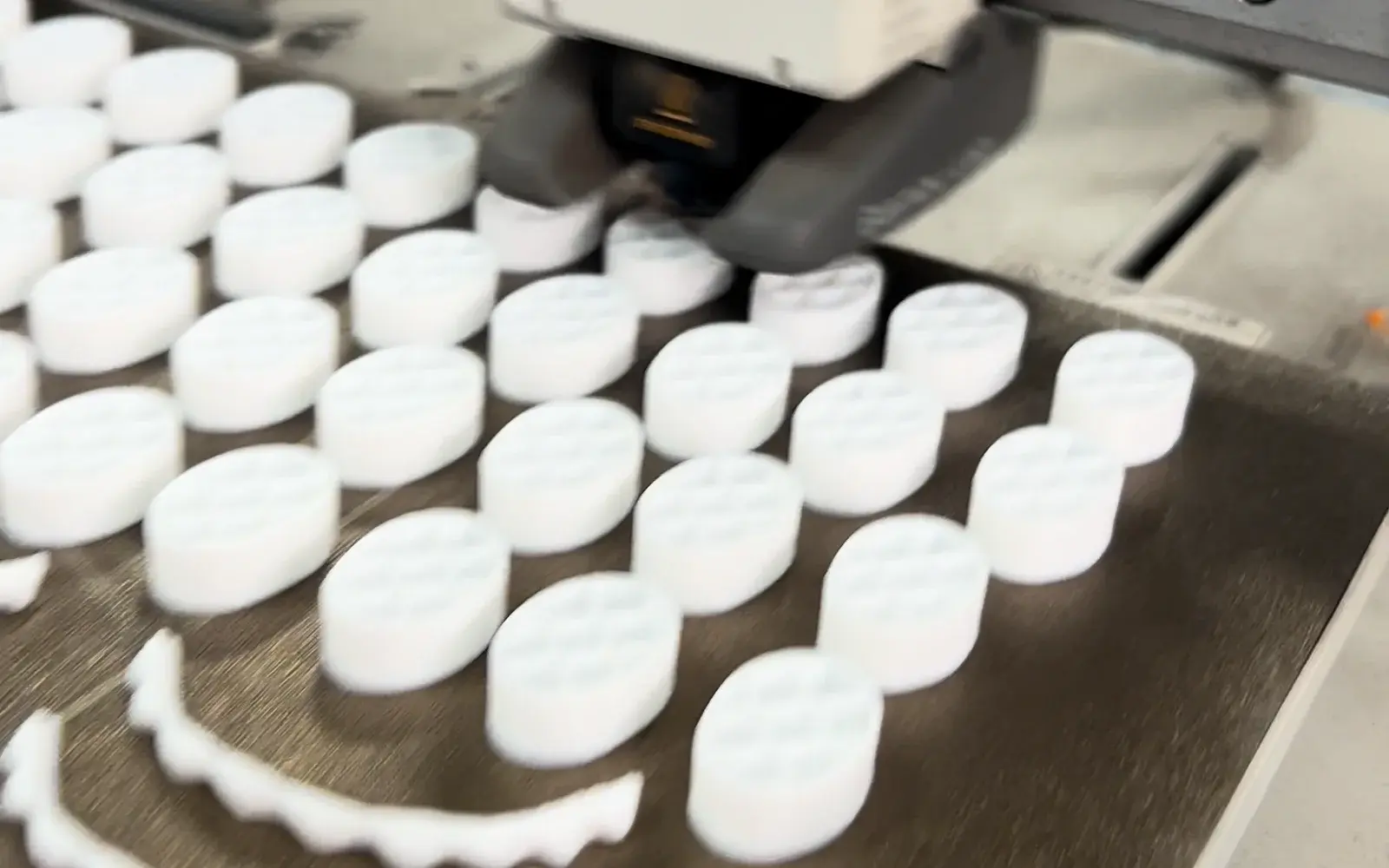
Start with demand certainty and the next design revision
1,000+ Bambu Lab FDM printers, directly operated and centrally scheduled at a single factory in Houjie, Dongguan. This supports parallel batch planning without a mold. The purchase decision still depends on part geometry, print time, acceptance criteria and the probability of a design change. Fleet count alone does not establish available capacity or a shipment date.
Use FDM for uncertain launch demand, bridge supply and design iterations. Evaluate molding when geometry is stable and lifetime volume can repay tooling. Molded and printed parts have different anisotropy, finish and design constraints; qualification must cover the intended application before comparing costs.
A transparent unit-economics model
For a compact enclosure, assume a constant $3.00 FDM conversion cost per accepted unit and $0 production-mold tooling. Compare a $1.00 molding conversion cost with an illustrative $4,000–$12,000 simple-tool budget. Aluminum or steel construction, cavities, slides, finish and tool life can push actual tooling outside this budget. These are arithmetic inputs, not supplier quotations or recorded customer results.
Total cost = tooling + quantity × conversion cost. Effective unit cost = total cost ÷ accepted quantity. With these inputs, molding's tooling-adjusted break-even is $4,000–$12,000 ÷ ($3.00 − $1.00), or 2,000–6,000 units. At the $8,000 midpoint, break-even is 4,000 units. Add sampling, inspection, rejects, freight, duties, packing, inventory and revisions before a buying decision.
| Units | FDM tooling / effective unit | Mold tooling / effective unit | First shipment planning assumption | Revision cost exposure | Supply-chain risk to review |
|---|---|---|---|---|---|
| 100 | $0 / $3.00 | $4,000–$12,000 / $41.00–$121.00 | FDM: 1–2 weeks; molding: 4–8 weeks | FDM: new DFM/sample; molding: tool modification or replacement | Launch changes and uncertain demand |
| 500 | $0 / $3.00 | $4,000–$12,000 / $9.00–$25.00 | FDM: 1–2 weeks; molding: 4–8 weeks | Same change scope; new CAD may affect both processes | Material availability and sample approval |
| 1,500 | $0 / $3.00 | $4,000–$12,000 / $3.67–$9.00 | FDM: 2–3 weeks; molding: 4–8 weeks | Obsolete inventory plus DFM/tool changes | Balance staged releases with scale savings |
| 3,000 | $0 / $3.00 | $4,000–$12,000 / $2.33–$5.00 | FDM: 2–4 weeks; molding: 4–8 weeks | Quote remaining demand at the new revision | Tool ownership, maintenance and transfer terms |
| 10,000 | $0 / $3.00 | $4,000–$12,000 / $1.40–$2.20 | FDM: 3–6 weeks; molding: 4–8 weeks | Check amortization against product life | Forecast error, inventory and supplier continuity |
Compare time to accepted parts, not machine time
The table's time bands are planning assumptions from complete inputs and approval activity to the first dispatch, excluding transit. They include an assumed sample/review cycle; neither route has a universal lead time. Expedited molding can be faster, complex FDM parts can be slower, and material or capacity constraints affect both. Obtain dated schedules from each supplier.
Keep print-window benchmarks separate from door-to-door delivery. Ask each quote to identify sample approval, production release, inspection, packing, dispatch and transit milestones. Compare the same accepted quantity, material properties and cosmetic standard; a low machine-only price is not a landed batch cost.
Bridge production while hard tooling is in progress
Split the order into an FDM pilot lot for validation or early shipments and a molded volume lot after tool approval. Keep separate process-specific drawings where draft, ribs, shrinkage or wall layout differ. A common external envelope does not make the two part designs interchangeable.
Use the pilot to validate PCB fit, inserts, cable routing and packing. Freeze the molding design only after the relevant test results are accepted. Record which revisions and quantities can ship as FDM, which require molded parts, and how mixed inventories are labeled and serviced.
- Request both a first-lot quote and a lifetime-volume comparison.
- Define who owns the mold, maintenance, storage and transfer rights.
- Set approval gates for design changes and material substitutions.
- Use a staged call-off plan when uncertain demand outweighs unit-cost savings.
Technical references & calculation basis
Manufacturer references inform design and process review. Cost, schedule and purge examples on this page use the stated planning assumptions; project inputs determine the final production plan.
Your next engineering review
Compare the production routes for my housing
Start with PETG-CF and 500 units. Add your critical dimensions, application and approval requirements to the brief.
Request an engineering reviewPrepare CAD and drawings · Compare FDM materials · Review the QC workflow